13 Things Most Visitors Do Not Know About Oak Alley Plantation
Most of what makes Oak Alley unusual is not the house. It is the trees, the arithmetic between them and the columns, and the fact that the place was named by people going past on the river.
- The twenty-eight oaks pre-date the house by about a century.
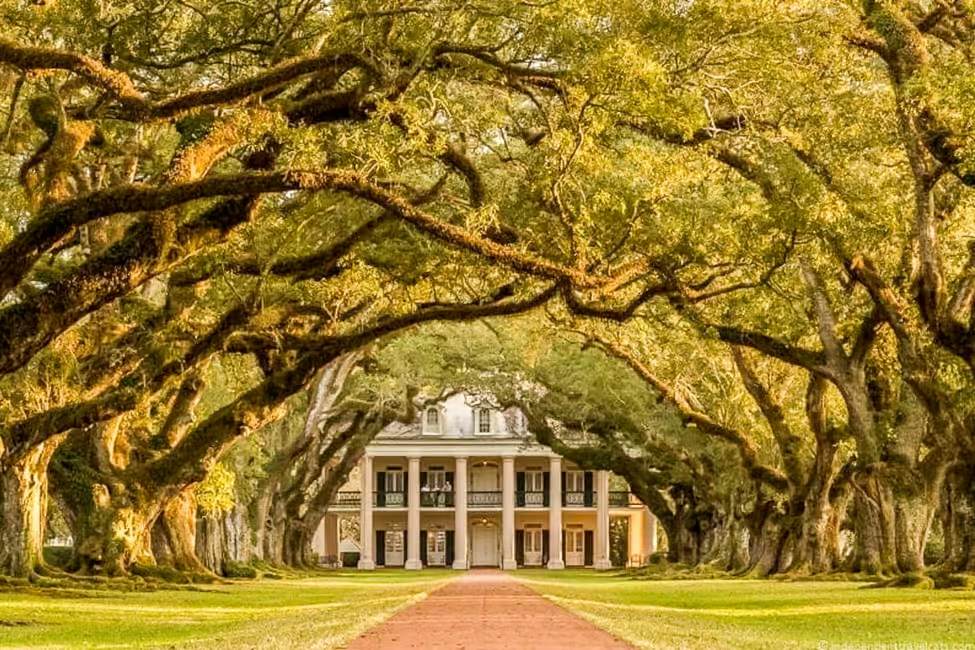
- The Big House carries twenty-eight columns, one for every tree.
- It was called Bon Séjour; steamboat passengers named it Oak Alley.
- It became a National Historic Landmark on 2 December 1974.
The trees came first, by about a century
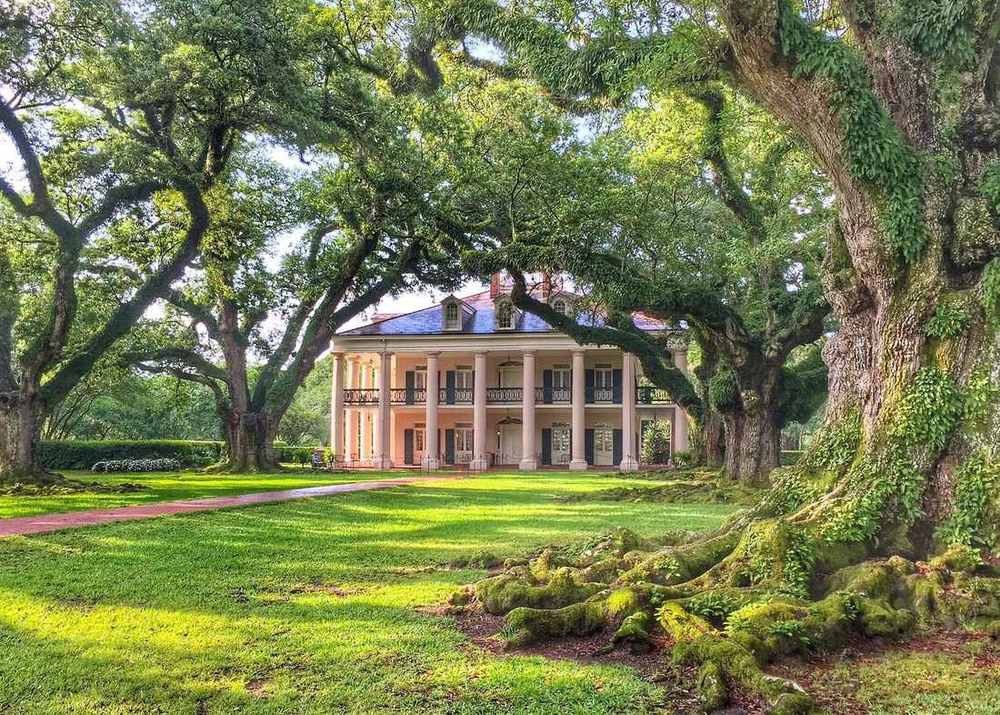
The twenty-eight live oaks were already mature when the Big House was built between 1837 and 1839. Whoever planted them is unrecorded. Everything the site is famous for existed before the family that gets the credit for it arrived.
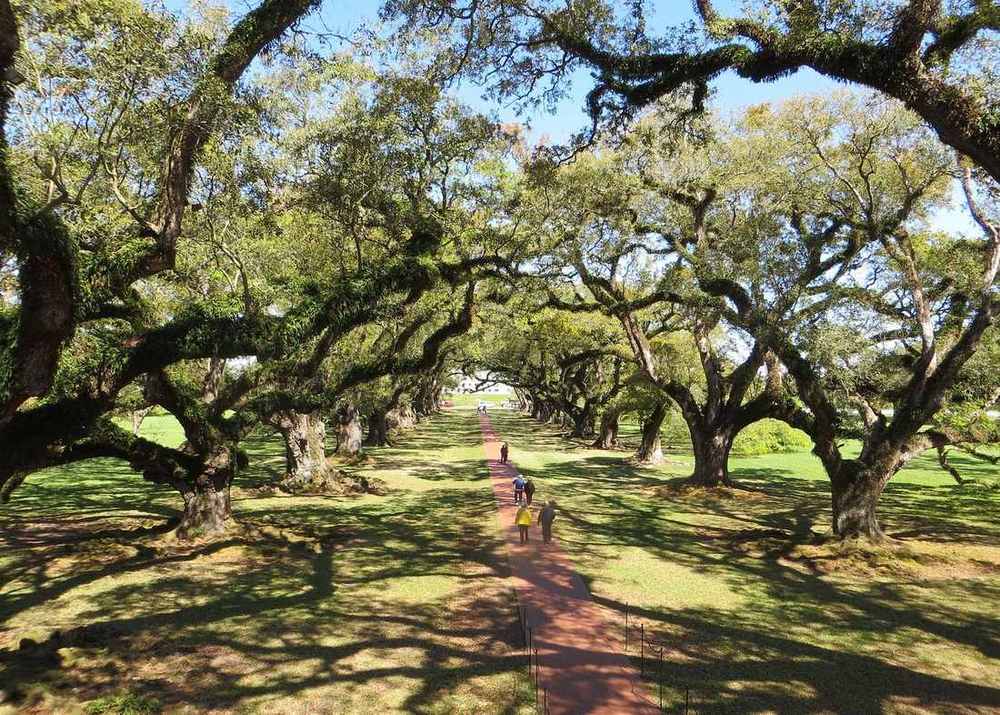
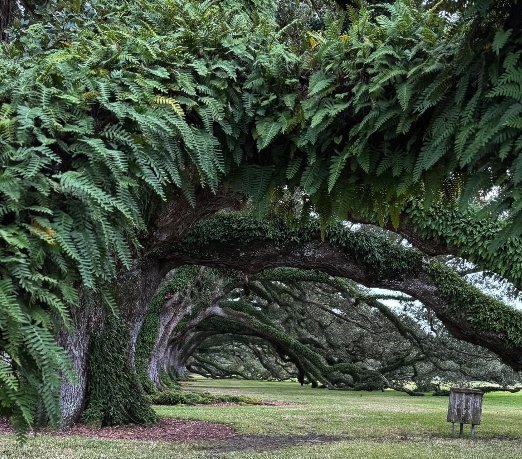
Southern live oaks are slow and long-lived, and they spread sideways rather than upwards, which is why the two rows meet overhead instead of forming a corridor of trunks. You are looking at trees that were a going concern before Louisiana was a state.
Live oaks are evergreen. The avenue looks much the same in February as in August, which is why the month you visit changes the heat and the crowd rather than the view.
Twenty-eight trees, twenty-eight columns
The colonnade wrapped around all four sides of the house carries twenty-eight Doric columns, one for every tree in the avenue. The house was built to the trees rather than the other way round.
It was not called Oak Alley
The estate was Bon Séjour — pleasant sojourn. Steamboat passengers on the Mississippi called it Oak Alley for the avenue they could see from the water, and the river name outlasted the legal one.
It was a sugar operation before it was a house
Valcour Aime worked the land for sugar from 1830. In 1836 he exchanged it with his brother-in-law, Jacques Télesphore Roman, for a plantation Roman held elsewhere. The house came after the business, not before it.
Enslaved people built it, and their names are being recovered
The house was raised by people Roman enslaved, under an overseer named George Swainy. The Oak Alley Foundation now maintains a public slavery database naming individuals from the plantation records, and the exhibit in the reconstructed quarters is built from that work.
The architect is probable, not proven
Roman’s father-in-law was the New Orleans architect Joseph Pilié, and he is the probable designer. There is no signed drawing. The attribution is long-standing and well-supported, and it is worth knowing which of those two things it is.
The house was nearly lost
Andrew and Josephine Stewart bought the property in 1925 and restored it. That restoration is the direct reason the building is standing, and the Stewart family graveyard on the grounds is theirs. Josephine Stewart set up the foundation that runs the site today.
It became a National Historic Landmark in 1974
Listed on the National Register and designated a landmark on 2 December 1974. The building was documented for the Historic American Buildings Survey, which is where the measured drawings and the column count come from.
You cannot photograph the interior
Cameras are not permitted inside the house. They are permitted on the upper balcony, which is where the long view straight down the alley to the levee is taken — the photograph most people actually came for.
If you only want the trees and the photograph, standing in the alley costs nothing. The ticket is for the house and the exhibits.
Ticket sales stop 45 minutes before closing
The gates shut at 4:45 p.m. but the ticket desk closes at 4 p.m. and the last house tour leaves at 4:30 p.m. Plan around the ticket desk rather than the gates and the problem disappears.
The restaurant is a block from the house
Not attached, and not included in any tour price. The walk is shaded by the oaks with benches on the way, and every guided trip leaves free time that covers it.
Rideshare is not a way home
The Foundation says so on its own visitor pages. Getting out from New Orleans is easy enough; getting back from a rural parish road late in the afternoon is not. It is the quiet reason most visitors arrive on a trip with the return built in.
The dates, in order
If you want the chronology rather than the trivia, this is it. You will meet most of these on the site itself, and the history page takes each one further.
| Year | What happened |
|---|---|
| 1830 | Valcour Aime works the land for sugar as Bon Séjour |
| 1836 | Aime exchanges it with Jacques Télesphore Roman |
| 1837–39 | The house is built by enslaved labour under overseer George Swainy |
| 1866 | The plantation is sold at auction |
| 1925 | The Stewarts buy and restore the house |
| 1974 | National Register listing and landmark designation |
Dates from the Oak Alley Foundation and the Historic American Buildings Survey record.
You can walk that whole list in an afternoon. Start with the alley, finish at the two burial sites, and you have covered a century and a half. Plan the timing on the visiting page and the drive on the transport page.
Two nearby plantations tell a completely different story
Laura Plantation is a Creole family history. Whitney Plantation is a museum of slavery. Both are minutes away on the same road, and travellers who take the Oak Alley-only trips regularly say afterwards that they would have paired one of them in.
Turning the facts into a visit
You can see nearly all of this in one afternoon, and most of it is self-guided. The one thing that needs timing is the guided house tour, because it runs to a schedule and the last one leaves at 4:30 p.m. The visiting page has the deadlines that matter, and the plantation page walks each exhibit in the order you meet it.
Two tickets exist and the difference between them is three dollars. Take the one with the house unless stairs are a problem. The admissions page covers both, and the discounts. Getting there is its own question, because there is no bus and no train: the transport page sets out the four ways people actually do it.
If you would rather have the arithmetic than the anecdotes, the full visitor guide puts the tickets, the timings and the drive in one place.
Every departure from New Orleans is compared on Oak Alley Plantation Tours, with the price, the rating, the hours on the grounds and the refund window side by side.
Tours that fit this trip
Trips that get you under the trees, from the cheapest upwards.