Inside Oak Alley Plantation: The Big House, the Exhibits and the Grounds
Six things to see, one of them guided and five of them not. Added up honestly they come to about three hours, which is an hour more than most day trips give you.
- Six things to see: the alley, the Big House, and four self-guided exhibits.
- Only the Big House tour is guided, and only it sits behind the dearer ticket.
- The Slavery at Oak Alley exhibit is billed at an hour on its own.
- Added up honestly it is about three hours, not the two most trips allow.
The alley: twenty-eight trees, a quarter of a mile
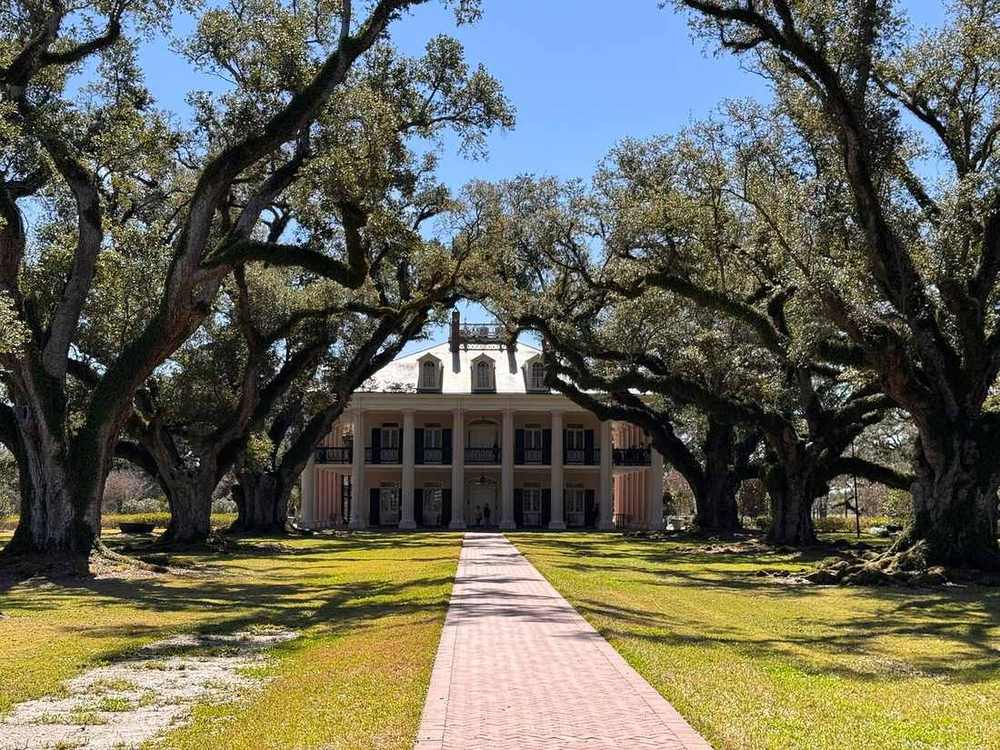
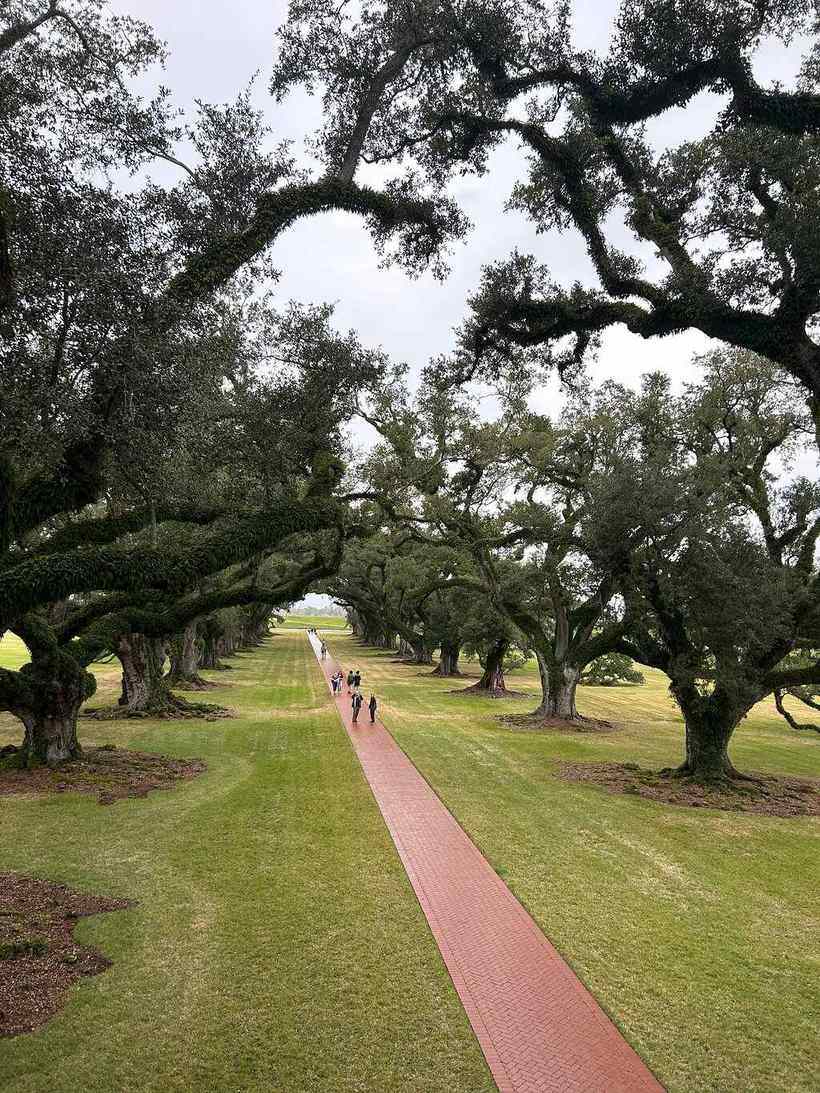
Two rows of fourteen southern live oaks run from the levee to the front steps. They were already mature when the house went up, planted roughly a century earlier by someone whose name has not survived. Live oaks spread sideways rather than up, so the canopies meet and the avenue reads as a tunnel.
Allow fifteen to thirty minutes. It costs nothing and needs no ticket — you can stand in it without buying anything at all.
Walk it slowly, and walk it twice if you can. The avenue reads completely differently looking towards the house and looking back towards the levee, and the second view is the one nobody photographs. Early morning is best: the light comes down the length of it and the coaches have not arrived.
Photograph the site map board at the entrance on the way in. The grounds are bigger than they look from the alley, and it saves you guessing which path leads to the forge.
The Big House: thirty-five guided minutes
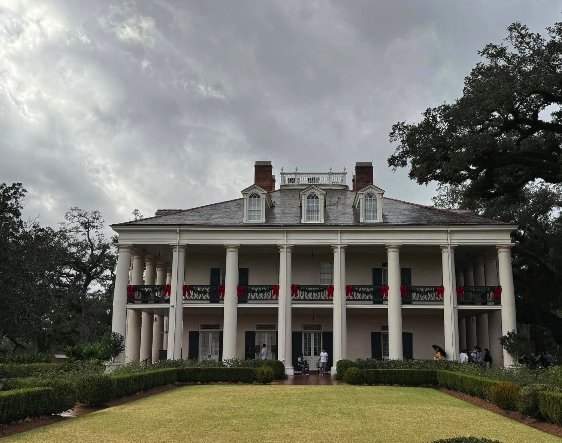
The Big House is Greek Revival, built 1837 to 1839 and wrapped on all four sides by twenty-eight Doric columns. A guide in period dress takes you through the ground and upper floors. It is the only guided part of the whole visit and the only part behind the dearer gate ticket.
Two constraints. Photography is not permitted in the rooms. And the route is stairs; the Foundation offers an iPad tour of the upper floor to anyone who cannot manage them, and the ramped basement level stays open to everyone.
Slavery at Oak Alley: allow an hour
A self-guided exhibit in reconstructed quarters under the trees, covering the men, women and children enslaved on this plantation and what happened after emancipation. The Foundation asks visitors to allow at least an hour, and it means it.
It also maintains a public database naming the people it has been able to recover from the plantation records. That work is why this exhibit reads as documentation rather than gesture, and it is the reason the site can be visited as a plantation rather than as a house with a garden.
The Sugarcane Theatre: fifteen to twenty minutes
Built around a three-dimensional map of the Roman family holdings. It explains how cane was planted, cut, ground and boiled here, and how the same land is farmed now. Short, and it is what makes sense of the cast-iron sugar kettles sitting out on the lawn.
The People of Oak Alley: 1866 to 1924
The plantation after the Romans. The 1866 auction, the tenant and wage-labour decades, and the families who lived and worked here until 1925. It answers the question the house tour tends to leave hanging, which is what happened next.
The number twenty-eight is not a coincidence. The colonnade was built to match the trees, which were already there.
The forge, the kettles and the tombs
A working blacksmith’s forge stands among the outbuildings. Between it and the levee are the sugar kettles, more exhibit outbuildings, the Roman family tomb and the Stewart family graveyard. All self-guided, all included in both tickets, and this is the part of a visit that stretches or shrinks to the time you have left.
Adding it up
Thirty minutes for the alley, forty for the house, an hour for the slavery exhibit, twenty each for the Sugarcane Theatre and The People of Oak Alley, half an hour for the forge and the tombs. That is a little over three hours before you have bought a coffee.
Most guided trips from New Orleans allow two. Two of them allow three. If you have read this far, the three-hour trips are the ones worth paying for.
Six things, and how long each takes
| What | Guided? | Allow | In which ticket |
|---|---|---|---|
| The alley of oaks | No | 15–30 min | Both, and free from the road |
| The Big House | Yes, period dress | 35–40 min | The $30 ticket |
| Slavery at Oak Alley | No | 1 hour | Both |
| Sugarcane Theatre | No | 15–20 min | Both |
| The People of Oak Alley | No | 15–20 min | Both |
| Forge, kettles and tombs | No | 20–40 min | Both |
Times are the Foundation’s own guidance. Only the Big House sits behind the dearer of the two gate tickets.
Which trips actually give you three hours is set out on the half-day page, and the full walk-through of each exhibit is on the plantation page. Ticket detail sits on the admissions page.
What you cannot see
There is no ball-and-chain reconstruction, no walk of the cane fields, and no access beyond the two floors on the house tour. The cottages on the property are lettings rather than exhibits. If your interest is specifically the history of slavery rather than the architecture, Whitney Plantation is a museum built entirely around it, and several trips pair the two in one day.
Planning around what you have just read
Knowing the site is half of it. The other half is arriving with enough of the day left to use it. The visiting page sets out the three deadlines that decide how much you get round, and the important one is not the closing time. It is the 4 p.m. ticket cut-off, forty-five minutes earlier.
What you pay turns on one choice: with the house or without, $30 against $27. The admissions page covers both, plus the three discounts the Foundation publishes and the one band it does not. If you are driving rather than taking a trip, the transport page is the one to read, because the return leg is the part with no fallback.
And if the exhibits rather than the architecture brought you here, read the comparison with Whitney and Laura before booking. Whitney is a museum built entirely around the history of slavery, and it is minutes away on the same road.
Every departure from New Orleans is compared on Oak Alley and swamp tour, with the price, the rating, the hours on the grounds and the refund window side by side.
Tours that fit this trip
Trips that give you three hours on the grounds, or come closest to it.