Oak Alley is famous for one view, but the estate is stranger and more interesting than the postcard suggests. Here are some genuinely surprising things about Oak Alley Plantation — all drawn from the historical record and the Oak Alley Foundation's own research. For the full narrative, see the history of Oak Alley.
The oaks are older than the house — by about a century
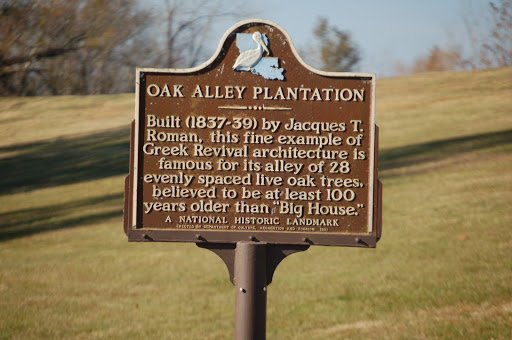
The 28 live oaks were planted in the early 1700s, most estimates placing it between about 1725 and 1750, by an unknown French colonial settler who left no other trace. The Greek Revival mansion did not go up until 1837–1839. So the avenue everyone photographs predates the house by roughly a hundred years; the Romans built their home to line up with oaks that were already mature and cathedral-like when they arrived.
It wasn't originally called Oak Alley
Jacques Roman named the estate Bon Séjour — "pleasant stay." The name Oak Alley came from riverboat travellers on the Mississippi, who took to calling the place for its unmistakable avenue of trees. The nickname stuck so thoroughly that it became the official name, and almost no one remembers Bon Séjour today.
The columns were built to match the trees
There are 28 colossal columns around the mansion, and that number is not a coincidence: it answers the 28 oaks leading up to it. The symmetry is deliberate, one of those details that is easy to miss until someone points it out, and then impossible to unsee.
An enslaved gardener changed American agriculture here
In 1846–47, an enslaved gardener known as Antoine successfully grafted the first commercially viable paper-shell pecan at Oak Alley. It is not a footnote: the innovation is named in the plantation's National Historic Landmark citation, alongside the architecture and the landscaping. The variety of pecan and the technique that made it possible trace back to the skill of a man held in bondage on this ground.
A sobering counterweight to the beauty: Oak Alley was a sugar plantation, and the Foundation has documented close to 200 enslaved people across its history — the men, women and children who built the house, tended and cut the cane, and ran the household. The estate now tells that story directly through its Slavery at Oak Alley exhibit.
There's a "King of Sugar" in the backstory
The land was originally established for sugar around 1830 by Valcour Aime, one of the wealthiest men in the South and known as the "King of Sugar." The mansion was built by Aime's brother-in-law, Jacques Roman, who acquired the property in 1836. Jacques's brother, André Roman, served twice as Governor of Louisiana — this was a family at the centre of antebellum Louisiana's sugar wealth and politics.
The clocks are stopped at 7:30
Josephine Stewart, who with her husband Andrew bought and restored the derelict house in 1925, was its last private resident and the reason it is open to the public at all. She died in 1972, and in the mansion the clocks are stopped at 7:30 — the time of her death — a quiet memorial to the woman who saved the place.
Hollywood keeps coming back
That familiar look is familiar for a reason. More than a dozen films, music videos and television episodes have been shot at Oak Alley. The plantation stood in for the vampire Louis's home in the 1994 film Interview with the Vampire; Beyoncé filmed her "Déjà Vu" music video and shot album art along the oak alley in 2006; and the mansion appears in the 1998 comedy-drama Primary Colors, among others. The oaks themselves were badly battered by Hurricane Ida in 2021, though the mansion came through solid.
The bricks came out of the river
The mansion is a square roughly 70 feet on each side, and its walls were built from bricks made on site — handmade from Mississippi River clay and, by some accounts, around 16 inches thick. The finer materials the enslaved builders could not make on the estate, including the glass, the slate for the roof and the marble that once floored the dining room, were imported and arrived by steamboat. It is a house built from the river it faces.
Antoine's pecan spread across the country
The paper-shell pecan that Antoine grafted at Oak Alley in 1846–47 was not a one-off curiosity. Grafting let growers reliably reproduce a superior nut with a thinner shell, and the technique and the variety went on to influence the commercial pecan industry across the South. It is a rare and striking case of an innovation credited, in a National Historic Landmark citation, to a man who was himself enslaved on the property.
The oaks took a beating in 2021
For all their age and grandeur, the oaks are not indestructible. Hurricane Ida's winds significantly damaged the iconic trees in 2021, and the plantation closed while it assessed the harm. The mansion itself came through solid, and the avenue endures — but it was a reminder that a 300-year-old living landmark is also fragile, and that the view is not guaranteed forever.
The house was nearly lost
Oak Alley came far closer to disappearing than its polished state suggests. After emancipation made the sugar operation unviable, the estate was sold at auction in 1866 for $32,800, then passed through a run of owners who could not afford its upkeep. By the 1920s the mansion stood vacant and deteriorating. It survived only because Andrew Stewart bought it as a gift for his wife Josephine in 1925, and she poured years into a full restoration — plumbing, electricity, structural repair. Without that intervention, one of the South's most famous houses would very likely have rotted into the ground.
You can sleep there now
Oak Alley is not only a day-trip attraction. The site has an on-site inn, so you can stay overnight on the grounds and see the oak alley at dawn or dusk without the day's crowds — genuinely the best way to experience the avenue. Between the inn, the restaurant, the gift shop and its steady run of film and photo shoots, the estate is very much a living, working place rather than a museum sealed behind glass.
It has been many things besides a plantation
After the Civil War and abolition made it unviable, Oak Alley was sold at auction in 1866 and passed through a run of owners before the Stewarts. In the twentieth century they ran it as a cattle ranch and later reintroduced sugarcane — this time without enslaved labour. Sugar plantation, abandoned property, cattle ranch, film set, and now a National Historic Landmark open to the public since 1976: the estate has worn a lot of hats in its 200-plus years. Want to see it for yourself? Browse guided Oak Alley Plantation tours, or check the visiting guide first.