If you are visiting plantations from New Orleans, the choice that comes up most is Oak Alley or Whitney. They are only a short drive apart on the same stretch of River Road, but they offer very different experiences, and the honest answer to "which should I visit" depends entirely on what you want from the day. Here is a clear comparison — and a case for doing both.
What each one is
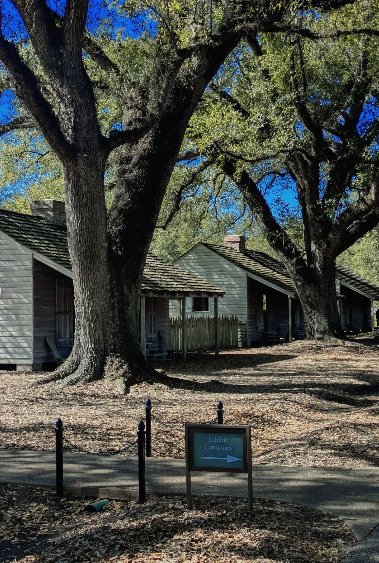
Oak Alley is the classic antebellum estate: the 1837 Greek Revival mansion, the quarter-mile avenue of 300-year-old oaks, and a guided Big House tour, alongside a Slavery at Oak Alley exhibit and reconstructed cabins. Whitney Plantation, by contrast, opened to the public only in 2014 as the only plantation museum in Louisiana with an exclusive focus on the history of slavery. It was created by the attorney John Cummings, who spent some fifteen years and a large personal fortune researching and restoring the site as a memorial to the enslaved.
The core difference
Most traditional plantation tours — Oak Alley's guided house tour included — centre the owners, the architecture and the antebellum lifestyle, with the enslaved people's story told alongside. Whitney inverts that completely. There is no romance of the Big House here; the entire experience is built around the lives of the enslaved. On a self-paced audio tour of around ninety minutes, you move between memorials rather than parlours: the Wall of Honor naming hundreds of people enslaved on the property, the Field of Angels remembering enslaved children who died, and Woodrow Nash's haunting Children of Whitney sculptures. Every visitor is given a lanyard bearing the name and story of one individual enslaved there, which shifts the focus onto human lives from the moment you arrive.
What visitors actually say: across the reviews for Oak Alley tours, a recurring note is that Oak Alley is the more beautiful site but that its guided house tour can feel focused on the owners — and that travellers who want the fuller, harder history of slavery should pair it with, or choose, Whitney. It is advice worth taking seriously when you plan.
Which is more beautiful?
Oak Alley, without much argument — the oak avenue is one of the most striking landscapes in the South, and the mansion is picture-perfect. If your priority is the classic plantation image, the grand house and the photographs, Oak Alley delivers it in a way Whitney does not try to. Whitney's power is different and quieter: it is moving and educational rather than picturesque, and many people find it the more affecting of the two precisely because it refuses the postcard.
Practical differences
Both sit about an hour west of New Orleans, and neither is reachable by public transport, so most visitors either drive or take a guided tour — the same no-rideshare reality applies to both, as our getting there guide explains. If you drive yourself, admission to each is broadly comparable (Whitney's adult ticket is in the region of $25; Oak Alley's is $27–$30), but check current prices before you go. Oak Alley's visit is anchored by a timed guided house tour; Whitney's is a self-paced audio experience. Both recommend booking ahead in busy periods.
Can you do both in one day?
Yes, and for many people it is the ideal answer. Because the two sit so close together, plenty of guided tours pair them, giving you Oak Alley's grandeur and Whitney's unflinching history in a single trip — the contrast between the two is, arguably, the most complete plantation experience the River Road offers. You can compare tours that visit both on our Oak Alley Plantation tours page, including a dedicated Oak Alley and Whitney combination.
A little more on Whitney
Whitney rewards knowing what you are walking into. The site operated as a plantation from 1752 to 1865 — originally Habitation Haydel, growing indigo before it turned to sugar in the early 1800s — and it retains an unusually complete set of sixteen original structures, including the Spanish Creole Big House and two surviving slave cabins. The memorials are the heart of it: the Wall of Honor naming hundreds enslaved on the property, the Allées honouring the many thousands of enslaved people recorded across Louisiana, the Field of Angels for the enslaved children who died, and a memorial to the 1811 German Coast Uprising, the largest slave revolt in United States history, which passed along this stretch of the river. It is a museum in the true sense, not a house tour with a difficult chapter attached.
Oak Alley's own reckoning
It is fair to Oak Alley to say it has done real work here too. Its Slavery at Oak Alley exhibit, the cabins reconstructed in 2013 in the footprint of the originals, and its online slave database all tell the story of the roughly 200 enslaved people documented on the estate — including Antoine, whose pecan graft is named in the plantation's landmark citation. The difference is one of emphasis: at Oak Alley that history sits alongside the grand house and the oaks; at Whitney it is the entire point.
A third option: Laura Plantation
If you have the appetite for more than two, Laura Plantation is the region's other standout — a Creole estate whose tour is intimate and biographical, built around the documented lives of one family, both free and enslaved, drawn from a remarkable written record. Where Whitney is panoramic and memorial, Laura is personal and story-driven, and many visitors pair Laura with either Oak Alley or Whitney. Several guided tours combine two of the three in a single day.
Planning a two-plantation day
If you decide to do both, a little sequencing helps. Whitney's self-paced audio format means you set your own rhythm, so it works well either side of Oak Alley's fixed, timed house tour — build the day around whichever Oak Alley slot you can get. Many combined tours run the two back to back with a lunch stop in between; expect a full day of roughly eight hours door to door once travel from New Orleans is included. Emotionally, the two are a lot to absorb together: Oak Alley's beauty and Whitney's memorial weight make very different demands, and most people find it better to give Whitney the fresher attention rather than tacking it on when they are tired. Whichever order you choose, book ahead in busy periods, since both sites and the tours that pair them can sell out in spring, autumn and around holidays.
So, which should you choose?
Choose Oak Alley if you want the iconic setting, the grand mansion and the photographs, with a serious slavery exhibit available on the side. Choose Whitney if your main reason for going is to understand the history of slavery, told from the perspective of the enslaved, and you are less concerned with architectural spectacle. Choose both if you can spare the day — seeing the beauty and the history side by side is what most visitors, on reflection, are glad they did. Whichever you pick, read the visitor reviews first, and go in ready for a day that is as thought-provoking as it is memorable.