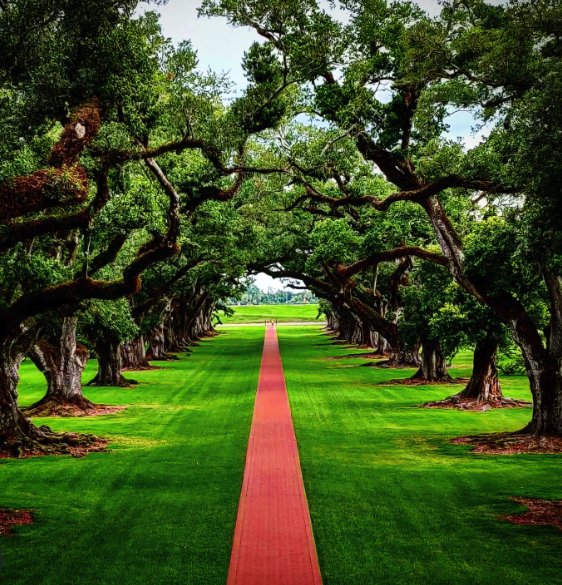
Oak Alley is one of the most photographed places in the American South, and the reason is simple: a quarter-mile of arching oaks leading the eye straight to a pale-peach mansion is about as strong a composition as landscape gives you for free. The challenge is getting the shot without a hundred other people in it. Here is how to photograph Oak Alley well. For more images to plan from, see our photo gallery.
The classic shot, and where to stand for it
The signature image is the axial view straight down the allée. There are two versions. From the river end looking toward the house, the mansion sits centred at the end of the green tunnel — the postcard. From the mansion's upper gallery or steps looking the other way, the oaks funnel toward the levee and the light, which many photographers prefer because it is less cluttered. Stand dead centre on the path, get low to exaggerate the arch of the canopy, and let the symmetry do the work; this is a composition that rewards being centred rather than following the rule of thirds.
When to go: light and crowds
Early morning is the answer to both problems at once. The light is soft and warm, it rakes down the avenue rather than blowing out the sky, and crucially you may have the alley close to yourself before the day-trip buses arrive. Late afternoon into the golden hour works too, with warmer tones and long shadows through the trunks. Overcast days are underrated: flat light removes the harsh contrast between the shaded tunnel and the bright lawn, and makes the moss and bark detail easier to hold. Avoid the middle of a bright day, when the canopy goes black and the lawn goes white.
The photographer's trick: stay overnight at the on-site inn. Guests can be out at the oak alley at dawn, well before general admission opens and the crowds build — it is the single most reliable way to get the classic shot with nobody in the frame.
Beyond the avenue
Once you have the hero shot, work the details. The mansion's 28 columns, black shutters and the ironwork of the galleries make strong graphic frames. Spanish moss hanging from the oaks gives you foreground texture — shoot through it to add depth. The gnarled, moss-covered roots and trunks of the individual oaks are portraits in their own right, especially in soft light. And a single person placed small at the far end of the path gives the whole scene a sense of scale that an empty avenue lacks.
Gear and settings
A wide to standard zoom covers almost everything; a wide angle exaggerates the length and arch of the avenue, while a longer lens compresses the oaks into a denser tunnel and pulls the mansion closer. Keep your sensor stopped down enough for front-to-back sharpness on the axial shots, watch your verticals so the columns stay straight, and if the sky is bright, expose for the highlights and lift the shadows later — the shaded tunnel holds detail better than a blown sky. A phone does a genuinely good job here too, especially in the softer morning and evening light.
Seasons
The live oaks are evergreen, so the avenue reads lush year-round, which is part of why Oak Alley photographs well in any season. Spring brings flowering colour to the grounds and gardens; autumn gives softer light and thinner crowds; summer is green and dramatic but hot and hazy by mid-morning. Whatever the season, the light matters more than the date — an overcast morning in July can beat a harsh noon in April.
Specific spots worth finding
Beyond the centred avenue shot, a few locations reliably deliver. Step off the main path to the individual oaks: their gnarled, moss-draped trunks and low, sprawling limbs make strong close portraits, especially with soft side light. Walk down toward the levee end and shoot back at the house so the trees frame it from a lower, wider angle than most visitors bother with. The mansion's columned gallery gives you repeating verticals and deep shade for graphic, high-contrast frames. And the reconstructed slave cabins, set apart from the grand house, are part of the same site and worth photographing with the same care — they are where the fuller story of the place lives.
Editing the shot
Oak Alley's scenes tend to benefit from a light touch in post. Straighten the verticals so the columns and trunks stand true, lift the shadows in the shaded tunnel to recover the moss and bark detail, and pull the highlights back if the lawn or sky has run bright. Resist the urge to crank the saturation; the greens are already intense, and oversaturating them tips the whole frame toward the artificial. A gentle, natural edit suits the subject far better than a heavy one.
A simple shot list to work through
If you have limited time, work a short list rather than wandering. Start with the axial avenue shot from the river end toward the house, centred and low, before the crowds build. Then reverse it and shoot from near the house back toward the levee, using the light at the far end. Next, pick two or three individual oaks for trunk-and-moss detail portraits. Add one frame with a single person placed small at the far end for scale, and one tight study of the mansion's columns and shutters. Finish at the reconstructed cabins for a quieter, more sober image that belongs in any honest record of the place. Six frames, and you will have covered the range of what Oak Alley offers rather than fifty near-identical versions of the one postcard.
Sharing, and other visitors
Oak Alley is busy, and everyone is there for broadly the same shot, so a little patience goes a long way. Wait for gaps rather than trying to clone people out later, keep off roped areas and planted beds, and be mindful that others are lining up the same composition behind you. If you are shooting for social media, the plantation's own photography guidance and any on-the-day signage are worth a glance — interior photography in particular is restricted.
A word on drones, and on respect
Aerial shots of the avenue are spectacular, but do not assume you can fly. Oak Alley is a protected historic site with daily crowds; if you hope to use a drone, contact the plantation in advance for permission rather than launching without asking. More broadly, remember what you are photographing. Oak Alley is beautiful, but it was built and worked by enslaved people, and the reconstructed cabins and slavery exhibit are part of the same site as the pretty avenue. Photograph it thoughtfully, and give the difficult parts of the estate the same attention as the postcard. To plan your visit around the best light, check the opening hours and browse guided Oak Alley Plantation tours.