Going alone
Visiting Oak Alley Plantation Without a Tour, Costed Honestly
Anyone can drive to the gate and buy a ticket from $30. Where that saves money, where it quietly costs more than the tour, and the two things a car does not solve on this particular road.
In this guide
- Can you visit Oak Alley on your own?
- What it costs to drive yourself, added up honestly
- Is there any public transport to Vacherie?
- Why rideshare is not a way home
- Parking, and what is not allowed
- The 4 p.m. ticket cut-off, and who it catches
- How long can you stay if nobody is waiting for you?
- What a guide gives you that a gate ticket does not
- Who is better off driving?
- Who is better off on a tour?
- What a car buys you that a coach cannot
- Timing a self-drive day against the deadlines
- What a self-drive day looks like, hour by hour
Can you visit Oak Alley on your own?
Yes, without qualification. It is a public visitor attraction that sells tickets at the gate, opens seven days a week and has a free car park. Nothing about the site requires a guided trip, and nothing about a guided trip gets you access a walk-up visitor does not have.
The guided Big House tour that comes with the dearer ticket is the same tour whether you arrived on a coach or in a hire car. The question is not access. It is cost, timing and the drive home.
It is worth being clear about that, because the way these trips are marketed can leave the impression that a tour unlocks something. It does not. There is no skip-the-line lane, no exclusive room, no early entry and no guide who takes you anywhere a walk-up visitor cannot go. What you are buying is a seat in a vehicle and somebody to talk to you on the way. Whether that is worth $45 a head is a real question with a real answer, and the answer changes depending on how many of you there are.
What it costs to drive yourself, added up honestly
The gate ticket is $30 with the house and $27 without. That is the easy part. The rest is the car.
| Line | Driving yourself | Guided trip |
|---|---|---|
| Admission, 2 adults | $60 | Included |
| Car for the day | $55–$90 | — |
| Fuel, 120 miles round trip | $12–$18 | — |
| Parking | Free | — |
| Tour fare, 2 adults | — | $150 |
| Rough total | $127–$168 | $150 |
| Time on the grounds | As long as you like | 2–3 hours |
| Who drives | You | Somebody else |
A one-day self-drive against the cheapest guided trip, for two adults. Rental and fuel figures are typical New Orleans day rates rather than a quote, and they are the numbers to replace with your own.
For two adults it lands close, and it can land either way depending on what a rental costs you that week. For one traveller the tour wins clearly. For four travelling together, driving wins clearly. That is the whole calculation and it is worth doing with real numbers rather than assuming.
Is there any public transport to Vacherie?
No. There is no bus and no train, and there is no seasonal or tourist shuttle either. Vacherie is a rural community in St. James Parish and the plantation sits on a levee road sixty miles from the city.
This is not a case of an awkward connection. There is simply no scheduled service, which is why every option comes down to a car, yours or somebody else's.
Why rideshare is not a way home
The Oak Alley Foundation says on its own visitor pages that rideshare is not reliably available at the site. That is unusual candour from an attraction and it is worth taking at face value.
Getting out from New Orleans is usually fine. Getting a car to come to a rural parish road at four in the afternoon is a different proposition, and people do get stranded. If you are not driving, book a trip with the return included rather than planning to improvise.
Parking, and what is not allowed
The car park at the visitor entrance is free and there is plenty of it. No charge, no time limit inside opening hours, no permit.
Overnight RV parking is not permitted. If you are travelling in a motorhome, plan to stay elsewhere and visit during the day.
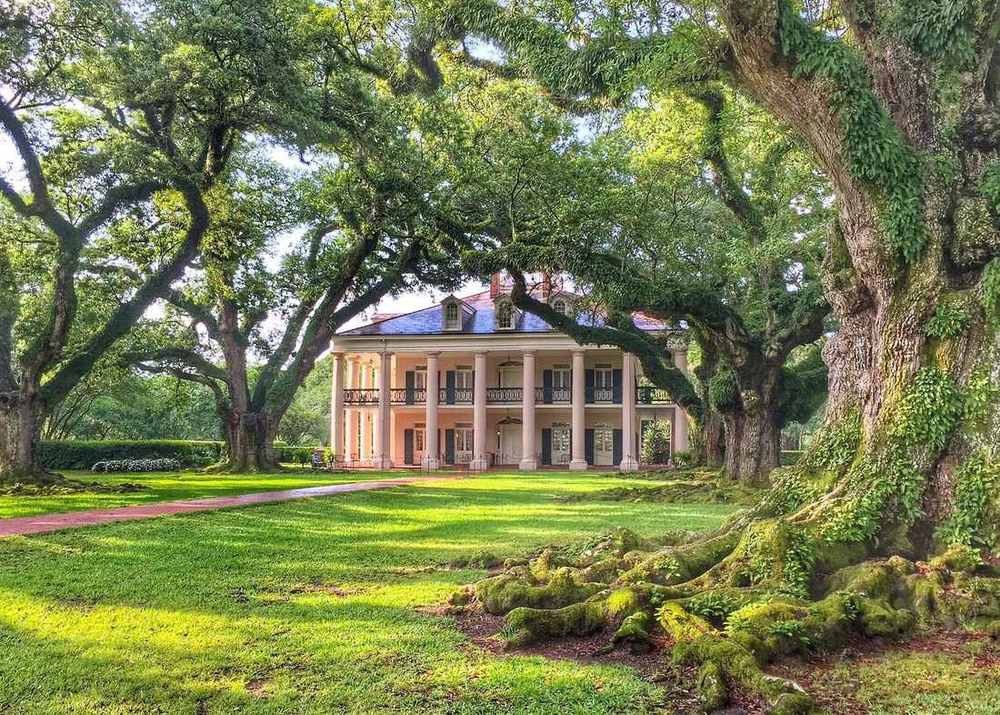
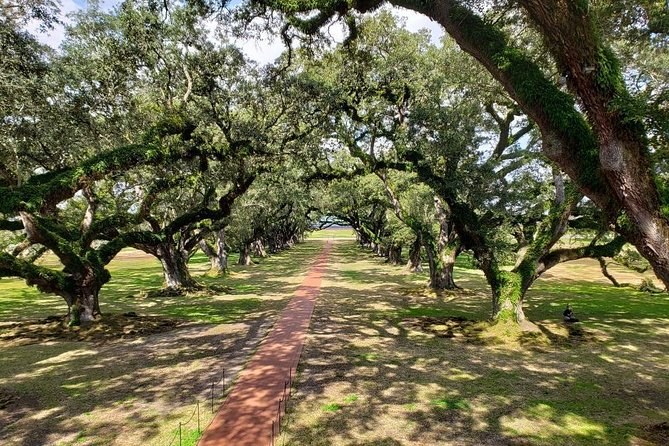
The car park sits at the visitor entrance rather than at the house, which means your first view of the alley is on foot from the far end — the way it is meant to be seen, and the reason the walk in is worth doing slowly rather than hurrying through to the ticket desk.
The 4 p.m. ticket cut-off, and who it catches
This is the one that ruins a self-drive day. The gates close at 4:45 p.m., but ticket sales stop at 4 p.m. and the last guided house tour leaves at 4:30 p.m..
Leave New Orleans at two, hit traffic, and you arrive with the ticket desk shut. The fix costs nothing: buy online before you set off. The admissions page covers both ticket types and where to buy them.
How long can you stay if nobody is waiting for you?
From opening to closing if you want, which is the single strongest argument for driving. A guided trip gives you two hours, occasionally three. A car gives you eight.
Whether you need eight is another question. The Foundation's own guidance is about two hours, and everything on the site adds up to a little over three. Past that you are enjoying the grounds rather than working through them, which is a perfectly good reason to be there.
What a guide gives you that a gate ticket does not
The narration on the drive, mostly. Reviewers on these trips talk about the driver commentary along the River Road more than almost anything else: what the other houses are, what the levee is for, what the cane fields are doing at that time of year.
At the plantation itself the difference is smaller, because the house tour is the same and the exhibits are self-guided either way. You are buying the sixty miles, not the two hours.
Who is better off driving?
Groups of three or more, where the fare multiplies and the car does not. Photographers, who want the alley at opening or at the end of the day rather than in the middle. Anyone who wants the three hours the exhibits actually need. Anyone pairing Oak Alley with somewhere the coaches do not go.
And anyone travelling on from Baton Rouge or Lafayette rather than out and back from New Orleans, because the round trip stops making sense.
Who is better off on a tour?
Solo travellers and couples, on cost. Anyone who would rather not drive an unfamiliar levee road. Anyone without a licence or a card that will take a rental deposit. Anyone who wants the swamp as well, because the boat operators are not walk-up businesses.
And anyone whose day has a hard end. A booked return is a fixed time; a hire car plus traffic is not.
What a car buys you that a coach cannot
A second stop. Oak Alley sits within a few minutes of Laura Plantation and a short drive from Whitney Plantation, and the guided pairings that do two houses in a day allow about ninety minutes at each. In your own car you can give one of them three hours and the other ninety minutes, which is a different day.
It also buys you the light. The alley photographs best in the first hour after opening and in the last hour of a November afternoon, and no coach schedule from New Orleans puts you there at either. If the photograph is the reason you are going, that alone settles it.
And it buys you the option of not going back to New Orleans. Baton Rouge is about an hour the other way, and the River Road corridor makes more sense as a leg of a longer drive than as an out-and-back.
Timing a self-drive day against the deadlines
Three fixed times govern the day and none of them is the closing time. Ticket sales end at 4 p.m.. The last guided house tour leaves at 4:30 p.m.. The gates shut at 4:45 p.m..
Leaving New Orleans at eight puts you at the gate before half past nine, ahead of the coaches, with the whole day in front of you. Leaving at midday is fine in summer, when there is daylight to spare, and tight in December, when there is not. Leaving after two in the afternoon means buying online first, because arriving to a closed ticket desk is the failure mode this whole page exists to prevent.
Allow ninety minutes each way rather than the seventy-five a coach manages. The route detail covers both banks and the two bridges that matter.
What a self-drive day looks like, hour by hour
Leave New Orleans at eight and you are at the gate by half past nine, before the coaches. Do the alley first while it is empty and the light is down the length of it. Take the first house tour slot you can get.
Then the exhibits in the order they fall: the quarters and the slavery exhibit, the Sugarcane Theatre, The People of Oak Alley, the forge and the tombs. Lunch on site. Back on the road by two and in the Quarter by half past three, with the afternoon still usable.
Frequently asked questions
Do I need to book ahead if I am driving?
Not to get in, but buy online if you will arrive after about two o'clock. Ticket sales stop at 4 p.m., forty-five minutes before the gates shut.
Is there anywhere to eat if I drive myself?
Yes, a restaurant and a gift shop about a block from the house. It is the only option on site.
Can I visit Oak Alley and Laura on the same self-drive day?
Comfortably. Laura Plantation is minutes away on the same road. The guided pairings do it in about eight hours including the drive from the city.
Is the road difficult to drive?
No. Interstate most of the way, then a straight levee road. The Westbank approach in the morning is the only slow part.
Can I get a taxi from New Orleans and back?
One way is usually possible. The return is the problem, and the Foundation itself warns about it.
Is it cheaper to drive?
For three or more people, yes. For one or two it is close and often not.
Every departure from New Orleans sits in one comparison on Oak Alley Plantation Tours, with price, rating, hours on the grounds and refund window in the same row.
Tours that fit this trip
Anyone can drive to the gate and buy a ticket from $30. Where that saves money, where it quietly costs more than the tour, and the two things a car does not solve on this particular road.