
Itinerary

Oak Alley Plantation as a Day Trip From New Orleans, by the Clock
Pick-up runs from eight in the morning to eleven, the drive is about seventy-five minutes each way, and the plantation gives most trips two hours. Everything else about the day follows from those three numbers.
In this guide
- How a River Road day actually runs
- What time do the tours leave New Orleans?
- The drive out: sixty miles, seventy-five minutes
- What fits into two hours on the grounds?
- Can you add a swamp and still be back for dinner?
- What about a second plantation instead?
- Three days, by the clock
- Where do you eat on a plantation day?
- How much walking is this, really?
- Can you do this on a cruise day or a flight day?
- What the weather does to the shape of the day
- What else is on the River Road if you have two days
- Three day plans, by how much time you have
How a River Road day actually runs
The shape is fixed by geography. Sixty miles out, two hours in the middle, sixty miles back. What varies is when the middle happens and what else is bolted on either side of it.
Half-days front-load: an early pick-up, the plantation before lunch, and you are back in the Quarter with the afternoon still yours. Combinations back-load: a later start, the boat first or second, and a return in the early evening. Neither is better, but they suit completely different days.
The thing worth deciding before you look at any listing is which end of the day you want to keep. If the evening matters — a dinner reservation, live music, an early night before a flight — a half-day protects it and a combination does not. If the morning matters, because you are travelling with children who are worth nothing after two in the afternoon, the same logic runs in reverse. Everything else about these trips is negotiable; the shape of the day is not, and it is the choice most people make last when it should be first.
What time do the tours leave New Orleans?
Between 8:00 a.m. and 11:00 a.m., and the time correlates with length rather than with quality. The four and five-hour trips leave earliest. The seven and eight-hour combinations start between half past ten and eleven, because the swamp operators run to their own timetables.
Pick-up windows are windows, not appointments. Several operators state plainly that the bus will not wait, so being outside at the start of yours is not optional. The four collection patterns differ enough to matter when you are choosing where to stay.
The drive out: sixty miles, seventy-five minutes
Out on the interstate, then down onto the levee road for the last stretch. The final part is the good part: Highway 18 runs along the top of the levee past four other surviving plantation houses, and every guided trip narrates it.
Driving yourself, allow ninety minutes each way rather than seventy-five. Traffic on the Westbank approach is the variable, and it is worse in the morning than the coach schedules suggest.
Nothing about the drive is difficult. It is interstate for the bulk of it and then a straight, flat, two-lane road along the top of the levee with the river hidden behind the embankment on one side and cane fields on the other. The only thing that catches people out is how little there is between the two ends: no services worth stopping at once you leave the interstate, and no reason to assume you will find coffee.
What fits into two hours on the grounds?
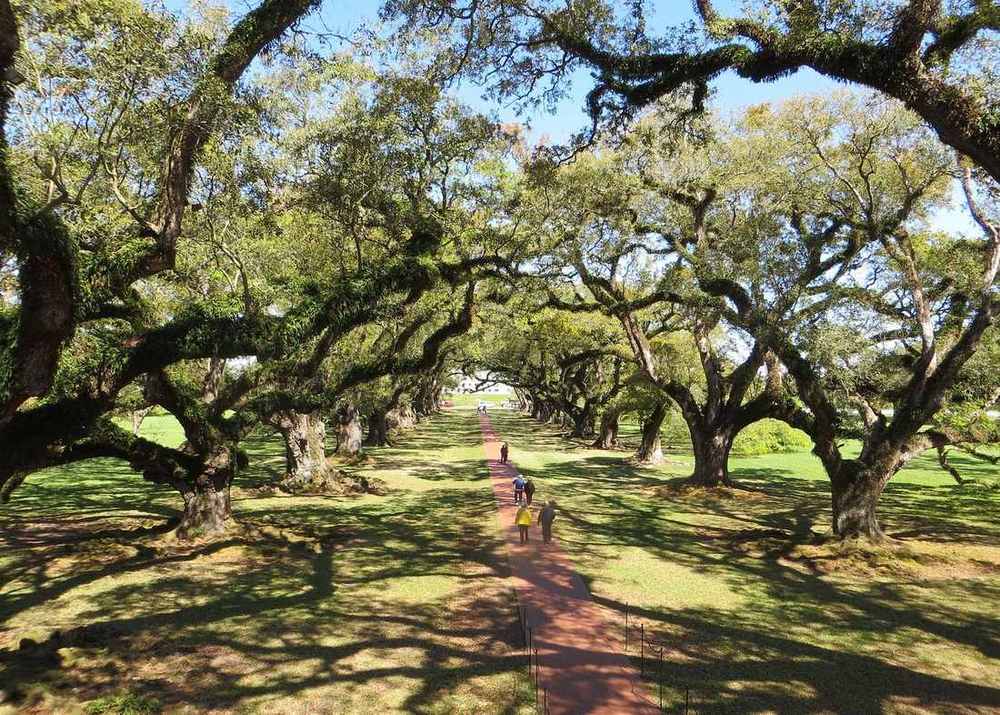
The guided Big House tour is thirty-five to forty minutes and runs to a timed slot. That leaves about eighty minutes. Eighty minutes is the alley, one exhibit, and a walk to the gift shop and back.
It is not every exhibit. The Slavery at Oak Alley exhibit is billed at an hour on its own, and the Sugarcane Theatre and The People of Oak Alley are fifteen to twenty minutes each. If you want them finished, you want a three-hour trip.
Can you add a swamp and still be back for dinner?
Yes, comfortably. The combinations return between half past five and six in the evening, which leaves the whole New Orleans evening intact. What they take is the middle of the day rather than the end of it.
The one thing to check is the order. Some trips do the plantation first and the boat second; others reverse it. A late-afternoon boat is better for wildlife and worse for light, and if you are photographing the alley you want it early.
What about a second plantation instead?
Two houses in a day runs about eight hours and gives you an hour and a half at each. That is enough for both guided house tours and almost nothing else, so it is a trade of depth for contrast.
The contrast is the point. Whitney Plantation is a museum of slavery and Laura Plantation is a Creole family history; either one changes how the Oak Alley house tour reads. If you have only one day on the River Road and the history is why you came, it is the better use of it.
Three days, by the clock
The same sixty miles, arranged three ways.
| Half-day | Swamp combination | Two plantations | |
|---|---|---|---|
| Pick-up | 8:00–8:30 a.m. | 10:30–11:00 a.m. | 9:30 a.m. |
| Arrive at the plantation | About 9:45 a.m. | About 2:45 p.m. | About 11:00 a.m. |
| Time on the grounds | 2–3 hours | 2 hours | 1 hour 30 each house |
| Back in New Orleans | 1:00–2:00 p.m. | 5:30–6:00 p.m. | 5:30 p.m. |
| Total | 4–5h 30 | 7h 30–8h 30 | 8 hours |
| Price from | $75 | $125 | $79 |
Three worked days, built from the departure times and durations the operators publish. Return times are approximate and traffic on the Westbank approach is the usual variable.
Compare every Oak Alley Plantation tour
Where do you eat on a plantation day?
On the site, or not at all. There is a restaurant and a gift shop about a block from the house along a shaded path with benches, and every itinerary leaves free time that covers a stop there.
No guided trip includes a meal and several exclude food and drink explicitly. One operator recommends a hearty breakfast and a packed lunch, which is honest advice for a seven-and-a-half-hour day. Bring water whatever the month.
How much walking is this, really?
Less than people expect. The grounds are flat, the alley is a quarter of a mile, and the walk from the house to the restaurant is about a block. The house tour covers two floors by staircase.
The variable is not distance, it is shade. The lawn in front of the house has none, and between June and September that is what tires people rather than the walking. The month-by-month page sets out which weeks.
Can you do this on a cruise day or a flight day?
A four to five-hour half-day works, with the return time as the figure to check rather than the departure time. An eight-and-a-half-hour combination does not, and neither does a two-plantation day.
New Orleans is a turnaround port, so this comes up often. Book the shortest trip with hotel or port-area collection, take the earliest departure, and treat the published return as approximate rather than guaranteed.
What the weather does to the shape of the day
Between June and September the middle of the day is the part to design around. The alley is shaded; the lawn in front of the house is not, and highs run about ninety-one in July and August. An eight in the morning departure gets you onto the grounds before the worst of it.
Storms are the other variable, and they are afternoon events rather than all-day rain. That argues for the plantation early and the boat later only if you are willing to lose the boat; the reverse order protects the half of the trip that cannot be rescheduled. The month-by-month page sets out which weeks this applies to, and it is a narrower window than most people assume.
October and April are the two months when none of this matters. Highs in the high seventies to low eighties, humidity down, and a full three hours on the grounds is comfortable at any hour.
What else is on the River Road if you have two days
The corridor between New Orleans and Baton Rouge carries half a dozen surviving plantation houses, and you drive past four of them on the way to Oak Alley without stopping. Evergreen has the oak-lined esplanade you will recognise from films. St. Joseph and Felicity sit next to each other and are where several productions were shot.
Two of them are open in a way that makes a second day worth planning. Whitney Plantation is a museum of slavery, self-guided with an audio guide, an hour and a half. Laura Plantation is a Creole family history and guided throughout.
Doing two houses on separate days rather than in one is the version that gives each of them the time it needs. The eight-hour pairings exist because most visitors have one day, not because ninety minutes is enough.
Three day plans, by how much time you have
Half a day. Earliest pick-up, plantation only, back by two. The half-day tours are the shortlist, and two of them give three hours on the grounds rather than two.
A full day, and you want the wetlands. A combination, back by six. Choose the craft before the price: an airboat excludes several kinds of traveller and a covered boat excludes none.
A full day, and you want the history. A pairing with Whitney, back by half past five. Less time at each house, and a completely different day for it.
Frequently asked questions
What time do Oak Alley tours get back to New Orleans?
Half-days between one and two in the afternoon. Combinations between half past five and six. Two-plantation days about half past five.
Is the drive included in the tour time?
Yes. A five-and-a-half-hour trip is about two and a half hours of driving and two hours at the plantation, plus loading.
Can I be dropped somewhere other than my hotel?
Most trips return you to your pick-up point. If you need somewhere else, ask the operator before booking rather than on the day.
Which trip is best for a first day in New Orleans?
A half-day. It leaves the evening free and it does not commit you to eight and a half hours before you have found your feet.
Do I need to bring lunch?
Not necessarily, but budget for buying it. Nothing includes a meal, and the restaurant is the only option on site.
How early do I have to be ready for pick-up?
At the start of your window, outside. Several operators state that the bus will not wait, and the windows can run thirty minutes.
Every departure from New Orleans sits in one comparison on Oak Alley Plantation tour from New Orleans, with price, rating, hours on the grounds and refund window in the same row.
Tours that fit this trip
Pick-up runs from eight in the morning to eleven, the drive is about seventy-five minutes each way, and the plantation gives most trips two hours. What fits inside the rest of the day, in three worked plans.